Best Korean Face Serums for Glowing, Hydrated Skin. Discover the best Korean face serums to hydrate, brighten, and smooth your skin. Compare our top 5 picks, key ingredients, pros, cons, and buying tips.
Korean skincare has become a favorite among beauty enthusiasts for its focus on hydration, skin barrier support, gentle formulations, and a healthy-looking glow. Whether you’re dealing with dryness, uneven skin tone, fine lines, or occasional breakouts, the best Korean serum for face can be a valuable addition to your daily skincare routine.
Unlike heavier creams, facial serums typically contain concentrated ingredients designed to target specific skin concerns. Popular Korean skincare ingredients include snail mucin, hyaluronic acid, niacinamide, centella asiatica (CICA), and peptides. Choosing the right formula can help improve the appearance of your skin while complementing your moisturizer and sunscreen.
However, not every serum works equally well for every skin type. Some prioritize deep hydration, while others focus on brightening, soothing, or improving the appearance of fine lines.
In this guide, we’ll compare five standout Korean facial serums, explain their benefits and limitations, and help you select a formula that suits your skin type, budget, and beauty goals. We’ll also explain how we evaluate products so you can make a more confident purchasing decision.
Top 5 Picks: Best Korean Face Serums
These five Korean skincare favorites stand out for different needs, from everyday hydration to brightening and soothing. The recommendations below are based on product positioning, commonly used ingredients, suitability for different skin concerns, and practical value—not on a claim that every formula has been independently tested by our team.
| Product | Best for | Key ingredients or focus | Main advantage |
|---|---|---|---|
| Beauty of Joseon Glow Serum: Propolis + Niacinamide | Dull, uneven-looking skin | Propolis, niacinamide | Balanced glow-focused formula |
| COSRX Advanced Snail 96 Mucin Power Essence | Dehydrated skin | Snail secretion filtrate | Lightweight, moisture-focused layer |
| SKIN1004 Madagascar Centella Ampoule | Sensitive-feeling skin | Centella asiatica | Simple, soothing-focused approach |
| Torriden DIVE-IN Low Molecular Hyaluronic Acid Serum | Dry, tight skin | Hyaluronic acid complex | Everyday hydration |
| Anua Niacinamide 10% + TXA 4% Serum | Uneven skin tone | Niacinamide, tranexamic acid | Targeted brightening approach |
Note: The COSRX product is technically an essence, rather than a conventional serum, but it serves a similar hydrating role in many skincare routines. Ingredient lists and availability can change, so check the current product label before buying
Best Korean Face Serums Review on Amazon
1/ Beauty of Joseon Glow Serum: Propolis + Niacinamide — Best Overall
Why consider it: A versatile choice for people who want a healthy-looking glow without building a complicated skincare routine.
The formula combines propolis extract with niacinamide. Propolis is valued in skincare for its conditioning properties, while niacinamide can help improve the appearance of uneven tone and support the skin barrier.
This Korean facial serum is worth considering if your skin looks dull, feels slightly dehydrated, or has an uneven appearance. Its combination of ingredients makes it a useful middle ground between hydration and brightening.

Pros
-
Combines glow-focused ingredients in one step.
-
Suitable for many normal and combination-skin routines.
-
Convenient for people starting Korean skincare.
Cons
-
Propolis may not suit people with bee-product allergies.
-
Results for dark spots vary and take time.
Best for: Shoppers seeking an everyday serum that supports a more radiant-looking complexion.
2/ COSRX Advanced Snail 96 Mucin Power Essence — Best for Hydration
Why consider it: A popular option for skin that feels tight, dehydrated, or rough.
COSRX’s formula features 96% snail secretion filtrate. The essence helps condition the skin and improve its hydrated appearance, making it useful under a moisturizer.
Although marketed as an essence, this product often fills the same routine role as a hydrating serum. Its slippery, slightly viscous texture helps it spread easily, and it can be layered with other skincare products. COSRX anti-aging cream

It is particularly appealing if you want skin to look plumper and feel softer without applying a thick cream immediately.
Pros
-
High concentration of snail secretion filtrate.
-
Helps improve the appearance of dehydration.
-
Layers well with many moisturizers.
-
Useful for a dewy, supple-looking finish.
Cons
-
The texture may feel tacky to some users.
-
It does not replace a moisturizer or sunscreen.
Best for: Dry skin that needs an extra layer of lightweight moisture.
3/ SKIN1004 Madagascar Centella Ampoule — Best for Sensitive Skin
This ampoule centers on centella asiatica, a botanical ingredient commonly used in skincare designed for sensitive-feeling or stressed skin.
Centella asiatica, also known as CICA, is widely used in Korean skincare because of its skin-conditioning and soothing properties. SKIN1004’s ampoule is a sensible choice for routines that emphasize comfort rather than multiple strong active ingredients.
If your skin frequently feels uncomfortable after cleansing or reacts easily to new products, a simple soothing formula may be preferable to a high-strength exfoliating serum. However, no product is guaranteed to prevent irritation.

Pros
-
Lightweight, easy-to-layer consistency.
-
Centella-focused formula.
-
A useful option for minimalist skincare routines.
-
Can complement a basic moisturizer.
Cons
-
May not directly address pronounced dark spots.
-
Sensitive skin can still react to individual ingredients.
Best for: People who want a soothing-focused ampoule to complement a gentle skincare routine.
4/ Torriden DIVE-IN Low Molecular Hyaluronic Acid Serum — Best for Dry, Tight Skin
The DIVE-IN serum uses a hyaluronic-acid-focused approach to attract and retain moisture in the skin’s surface layers.
Hyaluronic acid is a humectant, meaning it attracts water. This makes it useful for improving skin hydration and the temporary appearance of fine lines associated with dryness.
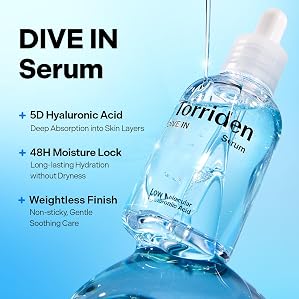
The serum is a practical option for people who prefer lightweight layers instead of rich creams. For best results, apply it to slightly damp skin and follow with a moisturizer to help reduce moisture loss.
Pros
-
Focuses on hydration rather than aggressive treatment.
-
Suitable for layering under cream and sunscreen.
-
A useful option for dehydrated combination skin.
-
Can help skin appear smoother and more supple.
Cons
-
May not be sufficient alone in dry environments.
-
Needs to be paired with suitable moisturizing care.
Best for: Anyone whose main concern is dehydration, tightness, or a less plump-looking complexion.
5/ Anua Niacinamide 10% + TXA 4% Serum — Best for Uneven Skin Tone
Why consider it: A more targeted choice for shoppers concerned about uneven tone and the appearance of post-breakout marks.
The formula combines niacinamide with tranexamic acid (TXA), ingredients used in skincare products formulated to improve the appearance of discoloration.
If your priority is a brighter, more even-looking complexion rather than hydration alone, this serum may be a better fit than a basic hyaluronic acid formula.

Pros
-
Targets the appearance of uneven skin tone.
-
Combines two commonly used brightening ingredients.
-
Can complement a routine designed for post-acne marks.
-
Offers a more focused approach than a basic hydrating serum.
Cons
-
May irritate reactive or compromised skin.
-
Will not remove every type of pigmentation.
-
Consistent sunscreen use remains essential.
Best for: People whose main concern is the appearance of dark spots or uneven tone and whose skin tolerates active ingredients.
Why Use a Korean Facial Serum?
The best Korean serum for face should do more than follow a beauty trend. It should address a specific concern and fit comfortably into your existing routine.
Here are the main benefits of adding a facial serum to your skincare regimen.
1. Improve Skin Hydration
Ingredients such as hyaluronic acid, glycerin, and snail secretion filtrate help attract or retain moisture and improve the appearance of dehydrated skin. With consistent use, a suitable hydrating serum can help skin look softer, smoother, and more supple.
2. Support a Brighter, More Even Complexion
Niacinamide and tranexamic acid are frequently used in formulas designed for uneven skin tone. Depending on the formulation and your skin, these ingredients may help improve the appearance of discoloration over time.
For persistent pigmentation, sunscreen is essential. A serum cannot reliably counteract the effects of ongoing UV exposure without adequate sun protection.
3. Help Soothe Sensitive-Feeling Skin
Korean skincare often emphasizes gentle layering and skin barrier support. Ingredients such as centella asiatica and panthenol can be useful in products intended to soothe and condition the skin.
If your skin is easily irritated, look for a formula with a manageable ingredient list and avoid introducing multiple active products simultaneously.
4. Improve the Appearance of Fine Lines
Dehydration can make fine lines appear more noticeable. Hydrating serums may temporarily soften their appearance by improving the skin’s moisture level.
Peptides and other targeted ingredients may also support specific cosmetic goals, although results depend on the formula. No ordinary facial serum can guarantee the removal of wrinkles.
5. Create a More Flexible Skincare Routine
Most serums are designed to be applied in a relatively thin layer before moisturizer. This makes it easy to customize your routine without replacing every product you already own.
For more skincare advice, ingredient explainers, and beauty tips, visit Beauty and Pinups.
How We Evaluate the Best Korean Serums
Our goal is to help readers compare products based on practical considerations rather than marketing claims alone. For this guide, we used a research-based evaluation framework covering product information, ingredient focus, intended skin type, usability, and value.
Important transparency note: The products in this article have not all been independently tested side by side by our editorial team. We do not claim laboratory measurements, clinical results, or personal testing that we cannot verify.
Our evaluation considers the following criteria.
Ingredient quality and purpose. We examine the ingredients associated with each product and whether they match its intended use, such as hydration, soothing, or brightening.
Suitability for different skin types. We consider whether a formula is a reasonable match for dry, oily, combination, or sensitive-feeling skin, while recognizing that individual reactions vary.
Texture and routine compatibility. We assess the intended role of the product, its likely layering needs, and whether it requires a separate moisturizer or other supporting products.
Why Trust Our Reviews?
Trustworthy beauty content should demonstrate experience where applicable, explain its research, and distinguish evidence from marketing.
Our editorial approach prioritizes:
-
Ingredient-focused recommendations: We explain why particular ingredients may be useful instead of repeating claims from product packaging.
-
Clear pros and cons: We identify potential drawbacks, including sensitivity risks, texture preferences, and limitations.
-
Reader-first comparisons: We match products to skin concerns so readers can avoid paying for ingredients they do not need.
-
Transparent limitations: We distinguish research-based recommendations from firsthand testing and avoid presenting cosmetic benefits as guaranteed medical outcomes.
-
Responsible purchasing advice: We encourage readers to check current ingredient lists, seller authenticity, and return policies before ordering.
Our recommendations are intended to help you make an informed choice, not to suggest that the most expensive or most popular serum will automatically deliver the best results.
Buying Guide: How to Choose the Best Korean Serum for Face
Before purchasing a Korean face serum, narrow your options by identifying your main concern. A formula that works well for dehydrated skin may not be the most appropriate choice for persistent discoloration or excess oil.
1. Identify Your Skin Type
-
Dry skin: Look for hyaluronic acid, glycerin, panthenol, and other hydrating ingredients. Pair your serum with a richer moisturizer if necessary.
-
Oily skin: Consider lightweight, non-greasy formulas. Niacinamide may help improve the appearance of excess oil and enlarged pores.
-
Combination skin: Choose a versatile serum that hydrates without leaving your skin feeling excessively heavy.
-
Sensitive skin: Favor simple, soothing-focused formulas and introduce new products gradually.
-
Mature skin: Look for hydration and ingredients suited to your specific concerns, such as peptides or appropriately formulated retinoids.
Remember that skin types can overlap. Oily skin can also be dehydrated, and sensitive skin can experience pigmentation concerns.
2. Match Ingredients to Your Main Concern
| Your primary concern | Ingredients to consider | Pick from this guide |
|---|---|---|
| Dehydration | Hyaluronic acid | Torriden DIVE-IN |
| Dullness and uneven-looking tone | Niacinamide, propolis | Beauty of Joseon Glow Serum |
| Sensitive-feeling skin | Centella asiatica | SKIN1004 Centella Ampoule |
| Dryness and rough texture | Snail secretion filtrate | COSRX Snail 96 Essence |
| Visible dark spots | Niacinamide, tranexamic acid | Anua Niacinamide + TXA |
The ingredient list matters more than the product’s marketing category. A serum labeled “glow” is not necessarily the best option for every person seeking brighter skin.
3. Check the Concentration and Formulation
A higher percentage does not automatically mean better results. Stronger formulas can increase the likelihood of irritation, and the performance of an ingredient also depends on the overall formulation.
If you are new to active skincare, start with one targeted product rather than combining several high-strength treatments.
4. Consider Texture and Layering
Serums can range from watery ampoules to thicker, gel-like formulas. If you dislike sticky finishes, prioritize lightweight products. If your skin feels tight after cleansing, a hydrating serum followed by moisturizer may be more useful than a mattifying formula alone.
Apply products from thinner to thicker textures when practical, while following each manufacturer’s directions.
5. Set a Realistic Budget
Compare the price per milliliter, bottle size, and how much product you need per application. A larger bottle may provide better value, but only if you enjoy the texture and can use it before its recommended period after opening.
Also purchase from reputable retailers. Counterfeit or improperly stored skincare products can pose quality and safety concerns.
6. Patch-Test Before Regular Use
Apply a small amount to a limited area according to the product’s directions before adding it to your full routine. Monitor for irritation and avoid using a new product on already inflamed or broken skin.
A patch test cannot guarantee that a reaction will never occur, but it can help identify some problems before broader use.
How to Use a Korean Face Serum for the Best Results
Even the best Korean serum for face needs to be used appropriately to fit your skincare goals.


For most people, consistency is more useful than using a large number of products. Give a well-tolerated formula several weeks to demonstrate cosmetic benefits, while remembering that results vary by ingredient and skin concern.
Frequently Asked Questions
Which Korean serum is best for glowing skin?
A serum containing niacinamide can help improve the appearance of uneven tone, while hydrating ingredients such as hyaluronic acid help skin look plumper and smoother. Beauty of Joseon Glow Serum is a reasonable option for shoppers seeking both hydration and a radiant-looking complexion.
Are Korean serums suitable for sensitive skin?
Some Korean serums are formulated with soothing ingredients such as centella asiatica and panthenol. However, Korean skincare is not automatically hypoallergenic. Check the full ingredient list, patch-test new products, and discontinue use if irritation develops.
Can I use a Korean serum every day?
Many hydrating and soothing serums are designed for daily use. Follow the manufacturer’s directions and introduce active ingredients gradually. If you experience persistent burning, redness, swelling, or irritation, stop using the product and seek appropriate professional advice.
How long does a Korean face serum take to work?
Hydration-related benefits may be noticeable relatively quickly, sometimes after the first few applications. Improvements in the appearance of uneven tone or fine lines generally take longer and depend on the formula, frequency of use, and your skin. There is no universal timeline for every serum.
Is snail mucin better than hyaluronic acid?
Neither is universally better. Snail mucin products can help condition the skin and improve its hydrated appearance, while hyaluronic acid is a well-established humectant used to attract water. Choose based on your skin’s needs, product texture, and personal tolerance.
Where should I buy Korean facial serums?
Buy from official brand stores or reputable beauty retailers that provide clear product information and reasonable return policies. Check packaging, ingredient lists, expiry information, and seller credentials. You can also explore additional skincare guidance at beautyandpinups.com.
Final Verdict: Which Korean Serum Should You Buy?
The right choice depends on your skin’s biggest concern—not simply which product is trending.
-
Best overall: Beauty of Joseon Glow Serum for a versatile glow-focused routine.
-
Best for hydration: Torriden DIVE-IN Hyaluronic Acid Serum for dehydrated skin.
-
Best soothing-focused option: SKIN1004 Madagascar Centella Ampoule.
-
Best snail mucin option: COSRX Advanced Snail 96 Mucin Power Essence.
-
Best for uneven tone: Anua Niacinamide 10% + TXA 4% Serum.
If you’re unsure where to begin, choose one product that addresses your main concern, use it consistently as directed, and pair it with a suitable moisturizer and daily sunscreen. This approach makes it easier to evaluate your results without unnecessarily complicating your routine.
The best Korean serum for face is ultimately the one that suits your skin, fits your budget, and helps you maintain a routine you can follow comfortably.
About the Author
Written by: Annabella
Annabella writes about beauty, skincare, and personal care, helping readers understand product ingredients, compare popular formulas, and make more informed purchasing decisions. Her editorial approach emphasizes clear explanations, practical buying advice, and realistic expectations rather than exaggerated product claims.
For more beauty tips, skincare guides, and product recommendations, visit Beauty and Pinups.
Affiliate disclosure: This article may contain affiliate links. If readers purchase through qualifying links, the publisher may earn a commission at no additional cost to them. Recommendations should remain focused on product suitability, ingredient information, and reader value.


